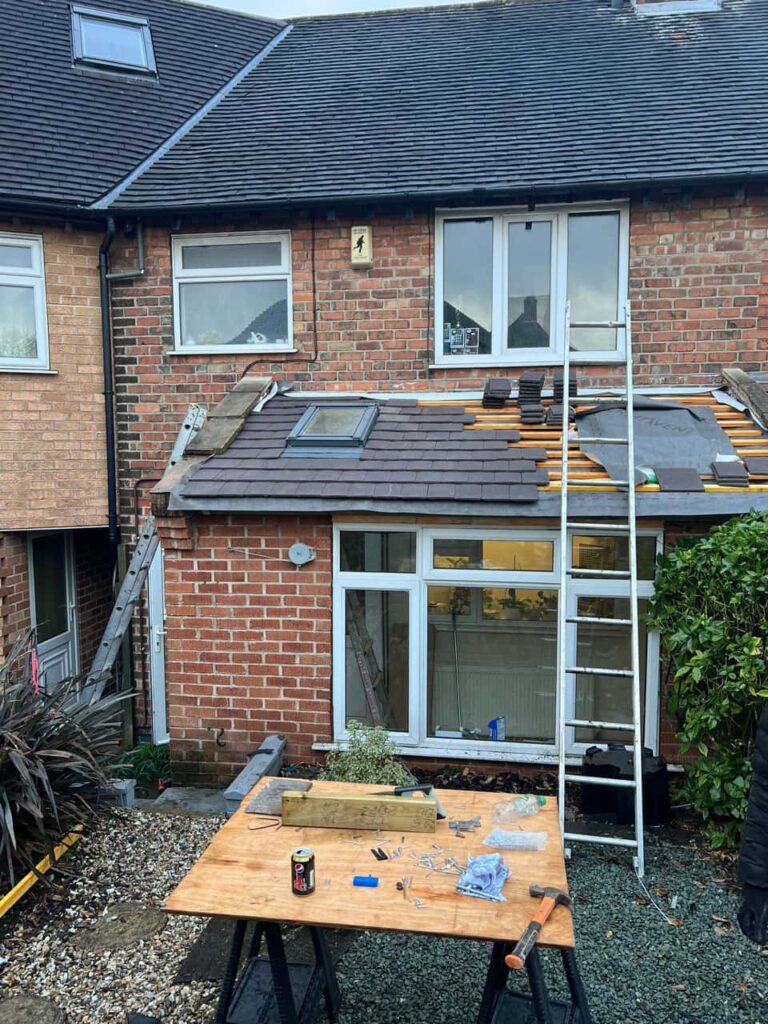
Noticing a single slipped roof tile may initially seem like a minor maintenance issue. However, when another tile moves shortly afterwards, followed by another in a different part of the roof, it can indicate that something more widespread is affecting the roofing system.
Roof tiles are designed to remain securely positioned while protecting the layers beneath from direct weather exposure. When they repeatedly begin slipping out of place, simply replacing each tile as it falls may not always address the underlying reason.
For homeowners in Glenfield, Leicestershire, understanding why tiles are moving can help prevent a relatively contained problem from developing into more extensive roof deterioration. At Glenfield Roofing Repairs, professional assessment allows the condition of the tiles, their fixings and the supporting roof components to be considered together.
Why Do Roof Tiles Slip?
Roof tiles can move for several reasons. Sometimes the problem is genuinely isolated, such as an individual tile becoming damaged during poor weather. In other cases, repeated slipping can indicate deterioration affecting a larger section of the roof.
Possible causes include:
- Ageing or deteriorating fixings
- Damaged roofing battens
- Cracked or weakened tiles
- Previous weather damage
- Movement within roofing components
- Poorly secured replacement tiles
- Wider deterioration across an ageing roof
Identifying which of these factors is responsible is more useful than repeatedly treating the visible symptom.
1. Tile Fixings May Have Deteriorated
Tiles rely on the roofing system beneath them and, depending on their type and installation, suitable fixings to keep them correctly positioned.
Over time, components can deteriorate. If fixings are no longer providing the necessary security, tiles may become increasingly vulnerable to movement.
This can help explain why an older roof sometimes begins losing tiles gradually rather than experiencing one dramatic failure.
The first slipped tile may therefore be an early warning that surrounding sections deserve inspection.
2. Roofing Battens Can Be Part of the Problem
The visible tiles are only one layer of a pitched roof.
Beneath them are supporting components, including battens to which tiles are positioned and secured. If these have deteriorated in a particular area, repeatedly replacing slipped tiles without examining the support underneath may fail to resolve the cause.
This is especially important where several neighbouring tiles have moved.
A professional roofer can assess whether the issue is confined to the tiles or whether components beneath the covering also require attention.
3. Cracked Tiles Can Lose Their Secure Position
A tile does not necessarily need to fall completely from the roof to be defective.
Cracking or damage around the areas where the tile is supported or fixed can affect its ability to remain correctly positioned. Continued exposure to wind and rain may then encourage further movement.
Where one damaged tile is identified, surrounding tiles should also be considered.
If several have experienced similar deterioration, there may be a wider pattern rather than a single accidental breakage.
4. Wind Can Expose Existing Weaknesses
Strong winds place additional pressure on roof coverings, particularly where tiles are already loose or inadequately secured.
Poor weather may therefore be the event that causes a tile to slip, but it is not always the complete explanation.
An ageing fixing, damaged tile or weakened supporting component may already have existed. Wind simply exposes that vulnerability.
If tiles regularly move whenever conditions become particularly windy, assessing the surrounding roof can help determine why they are becoming susceptible.
5. One Missing Tile Can Leave Surrounding Areas More Exposed
Roof coverings are designed to work as an interconnected system.
When a tile slips significantly or disappears completely, the area beneath can become more exposed to rainfall. Depending on the roof construction and location of the damage, neighbouring materials may also experience increased weather exposure.
This is why a missing tile should not be ignored simply because no internal damp is immediately visible.
A roof can develop a defect before water reaches a ceiling or wall inside the property.
6. Previous Repairs May Reveal a Wider Pattern
Having several previous tile repairs does not necessarily mean those repairs have failed.
Imagine that one damaged tile was correctly replaced while surrounding tiles and their supporting components continued ageing. Months later, another tile could slip nearby even though the original repair remains completely sound.
When this happens repeatedly, it becomes useful to consider the history of the roof.
Questions worth asking include:
- Are tiles repeatedly slipping from the same slope?
- Are several different sections affected?
- Does movement mainly occur after windy weather?
- Are the tiles themselves visibly deteriorating?
- Does the roof contain numerous previous tile repairs?
The pattern can provide valuable clues about the overall condition of the covering.
7. An Ageing Roof May Develop Several Problems Together
Roofs rarely deteriorate uniformly.
One section might develop slipping tiles while another experiences damaged flashing or problems around ridges and hips. Initially, each issue may appear unrelated.
As the roof continues ageing, however, several defects developing within a relatively short period can indicate broader deterioration.
That does not automatically mean a new roof is required. It does mean the complete roof deserves assessment rather than focusing exclusively on whichever tile has most recently moved.
What Are the Warning Signs of a Slipped Tile?
A tile does not always fall to the ground.
From a safe position at ground level, homeowners may notice:
- A tile sitting lower than surrounding tiles
- An obvious gap in the roof covering
- Uneven tile lines
- Part of a tile projecting unusually
- Broken tile fragments below the roof
- A visibly exposed section
- Repeated changes following windy weather
Internal warning signs can also include damp patches or water staining, although these may only become visible after rainfall has already entered the roofing system.
Why Might a Leak Appear Away from the Slipped Tile?
Water does not necessarily travel straight down after entering a roof.
It may follow underlay, timbers or other components before reaching a location where it becomes visible inside the property.
This means a damp patch should not automatically be assumed to sit directly beneath the defective tile.
Professional investigation considers both the external roof condition and the route water may have taken internally.
This is particularly important where more than one tile has moved.
Can a Single Slipped Tile Simply Be Repaired?
Yes, in many cases.
If one tile has been accidentally damaged or displaced and the surrounding roof remains in good condition, a localised repair may be entirely appropriate.
A professional repair can restore the affected section without unnecessary work elsewhere.
The situation deserves closer investigation when slipping becomes repetitive. If tiles continue moving one by one, identifying why they are losing their secure position becomes increasingly important.
When Do Repeated Slipped Tiles Suggest a Bigger Problem?
Several factors can indicate that the issue extends beyond individual tiles:
- Multiple tiles have moved within a relatively short period
- Slipping repeatedly occurs across the same roof slope
- Surrounding tiles are visibly deteriorating
- Fixings or supporting components are affected
- Several roofing problems are appearing simultaneously
- New movement follows relatively ordinary periods of bad weather
- Previous localised repairs are becoming increasingly frequent
In these circumstances, a broader inspection can determine how much of the roof is actually affected.
Why Replacing Tiles Without Investigating the Cause Can Be Ineffective
Replacing a slipped tile restores the visible covering, but it does not necessarily explain why the tile moved.
If deterioration exists underneath, another tile could eventually develop the same problem.
A more effective approach is to establish whether the defect involves:
- The individual tile
- Its fixing
- Supporting components beneath it
- A localised roof section
- Wider deterioration across the covering
Once the extent of the problem is understood, the repair can be matched to the actual cause.
Could Repeated Slipping Eventually Lead to Roof Replacement?
Potentially, but repeated slipped tiles do not automatically mean that a roof needs replacing.
If the majority of the roof remains serviceable, appropriate repairs may continue to provide a dependable solution.
Replacement becomes more relevant where tile movement forms part of widespread deterioration involving substantial areas of the roof and its supporting components.
The decision should therefore be based on the overall condition of the roofing system rather than the number of tiles that happen to be missing on a particular day.
Why Prompt Attention Is Worthwhile
Roof defects can become more complicated when exposed continuously to wind and rainfall.
Addressing a slipped tile promptly provides an opportunity to restore the affected area while checking whether surrounding components remain secure.
Leaving the opening exposed can give weather more opportunity to affect materials beneath the main covering.
Early investigation is particularly worthwhile when a second or third tile has already started moving, because this may indicate that the problem is becoming repetitive.
Professional Slipped Tile Repairs in Glenfield
At Glenfield Roofing Repairs, we provide professional roofing inspections and repairs throughout Glenfield, Leicestershire.
Where roof tiles are beginning to slip, our focus is not simply on putting the visible tile back into position. The surrounding area should also be considered so that the reason for repeated movement can be properly understood.
If the defect is genuinely isolated, targeted repair may be all that is required. Where deterioration extends into surrounding tiles, fixings or supporting components, identifying this early allows the roofing work to address the wider cause.
Conclusion
Roof tiles can begin slipping one by one because of damaged tiles, deteriorating fixings, weakened supporting components, weather exposure or wider ageing across the roofing system. While one displaced tile may be an isolated defect, repeated movement deserves closer attention.
The important question is not simply how to replace the latest slipped tile, but why tiles are becoming loose in the first place. Identifying the underlying cause can help prevent a cycle of repeated repairs and reduce the opportunity for water to reach more vulnerable areas beneath the covering.
For homeowners in Glenfield, Leicestershire, Glenfield Roofing Repairs can assess slipping or damaged roof tiles and determine whether the problem requires a focused repair or more extensive attention. If you have noticed several tiles beginning to move, arranging a professional roof assessment can help establish what is happening before further sections are affected.
Call us on: 0116 502 2198
Click here to find out more about Glenfield Roofing Repairs
Click here to complete our contact form and see how we can help with your roofing needs.