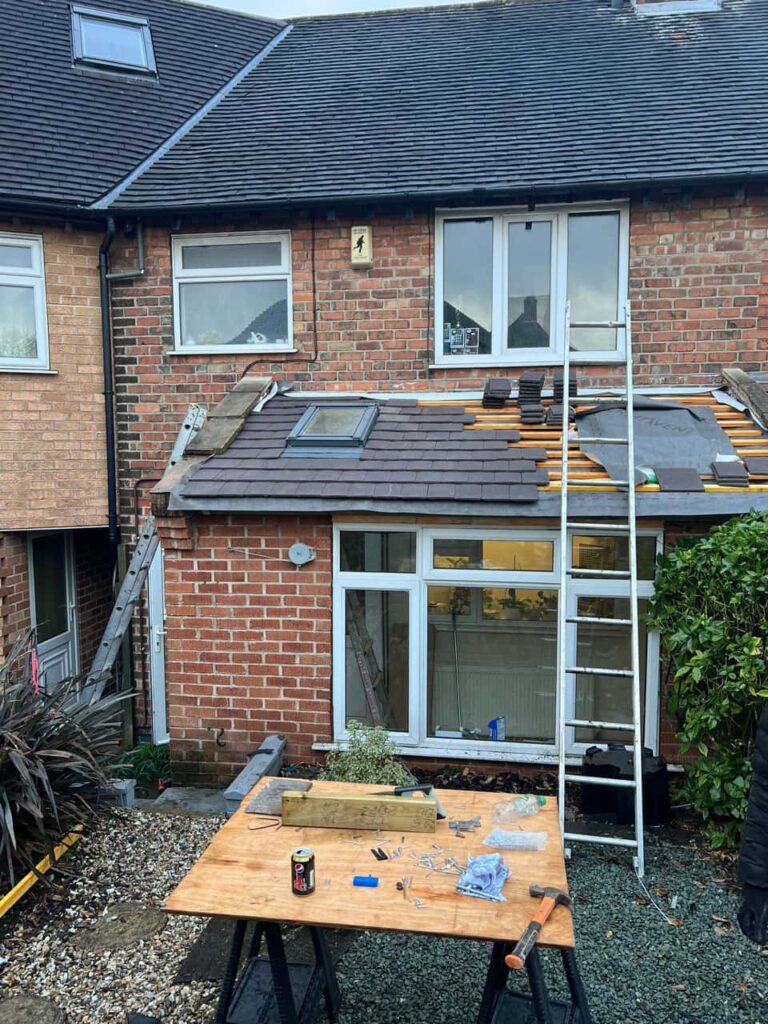
Strong winds are commonly associated with slipped roof tiles, but storm damage is not the only possible cause. A tile can move during calm weather because its fixing has deteriorated, the supporting timber has weakened or gradual movement within the roof has reduced its stability.
For homeowners in Glenfield, Leicestershire, a slipped tile should be treated as evidence that part of the roofing system requires attention. Even when the tile remains on the roof and no internal leak is visible, the exposed gap can leave the underlay and surrounding materials more vulnerable to rainwater.
Common Reasons Roof Tiles Slip Without a Storm
Tiles are designed to overlap and work together as a weather-resistant covering. Each tile also relies on fixings, battens and neighbouring materials to remain secure. If one of these elements deteriorates, a tile may gradually move until the displacement becomes visible.
The immediate task is to refit or replace the affected tile, but it is equally important to determine why it slipped. Without addressing the underlying cause, the same tile or others nearby may move again.
Ageing Nails and Fixings
Traditional nails and other tile fixings can weaken over time. Corrosion may reduce their strength, while repeated expansion and contraction can loosen their hold.
The tile may remain in position for a considerable period before gravity and routine roof movement cause it to slide. If one fixing has deteriorated, others of a similar age may also require inspection.
Deteriorated or Damaged Battens
Roof tiles are usually supported by horizontal timber battens. If a batten becomes split, decayed or weakened by prolonged moisture exposure, it may no longer hold the tile securely.
A loose tile can therefore be a sign of deterioration beneath the visible roof covering. Simply returning it to position will not provide a dependable repair if the supporting batten is unable to retain the fixing.
Natural Expansion and Contraction
Roofing materials respond to changes in temperature. Tiles, fixings and timber components expand and contract at different rates, creating small amounts of movement across the roof.
This process is normally accommodated by a well-installed roofing system. However, where fixings are already loose or materials have become brittle, repeated seasonal movement can gradually displace a tile without any single severe weather event.
Cracked or Worn Tile Nibs
Many roof tiles have small projections known as nibs, which help them rest on the battens. If a nib cracks or breaks, the tile loses part of its support and may begin to slide.
This damage can develop through age, previous handling, frost-related deterioration or pressure from neighbouring tiles. Because the broken section is often concealed beneath the overlap, the cause may not be visible from ground level.
Earlier Installation Problems
Occasionally, a tile slips because it was not fixed or positioned correctly when the roof was installed or previously repaired. Insufficient fixing, uneven battens or an unsuitable tile overlap can reduce its stability.
The problem may take years to become apparent. Gradual movement can eventually allow the tile to drop, even though weather conditions at the time seem unremarkable.
Movement Elsewhere in the Roof
The condition of neighbouring tiles can influence the security of an individual unit. If adjacent materials have shifted, cracked or lifted, they may no longer provide the expected support.
Movement in battens or other roof components can also alter the alignment of several tiles. A professional assessment can establish whether the issue is confined to one tile or forms part of a broader pattern.
Moss and Debris Can Contribute to Movement
Moss can grow between overlapping tiles and around their edges. As it develops, it may lift materials slightly, restrict drainage or retain moisture against the roof covering.
Organic growth alone does not always cause tiles to slip, but it can contribute where fixings or tile nibs have already weakened. Debris collecting beneath an edge can have a similar effect by preventing the tile from sitting correctly.
Why a Slipped Tile Should Be Checked Promptly
A displaced tile can expose the underlay beneath it. Although underlay provides secondary protection, it is not intended to serve as the main weatherproof covering for an extended period.
Rainwater may reach the roof space if the underlay is torn, aged or punctured. Moisture can then affect battens, insulation, timber and internal finishes before obvious dripping appears.
A slipped tile may also become less secure over time. Prompt inspection allows the immediate defect and its underlying cause to be addressed together.
What Should a Professional Inspection Cover?
A thorough inspection should consider more than the visible tile. Relevant checks may include:
- the condition of the tile and its nibs
- the security of its fixings
- the strength of the supporting batten
- the alignment of neighbouring tiles
- the condition of accessible underlay
- signs of moisture or timber deterioration
- evidence of wider movement across the roof
These checks help determine whether a straightforward tile repair is sufficient or whether nearby components also need attention.
Conclusion
A roof tile can slip without a storm because of ageing fixings, deteriorated battens, broken nibs, temperature-related movement or an earlier installation issue. The movement may be gradual, but the resulting gap can still reduce the roof’s ability to keep out water.
If you have noticed a slipped roof tile at your property in Glenfield, Leicestershire, Glenfield Roofing Repairs can assess the affected area, identify why the tile moved and recommend an appropriate repair. Contact our team to arrange a professional roof inspection.
Call us on: 0116 502 2198
Click here to find out more about Glenfield Roofing Repairs
Click here to complete our contact form and see how we can help with your roofing needs.