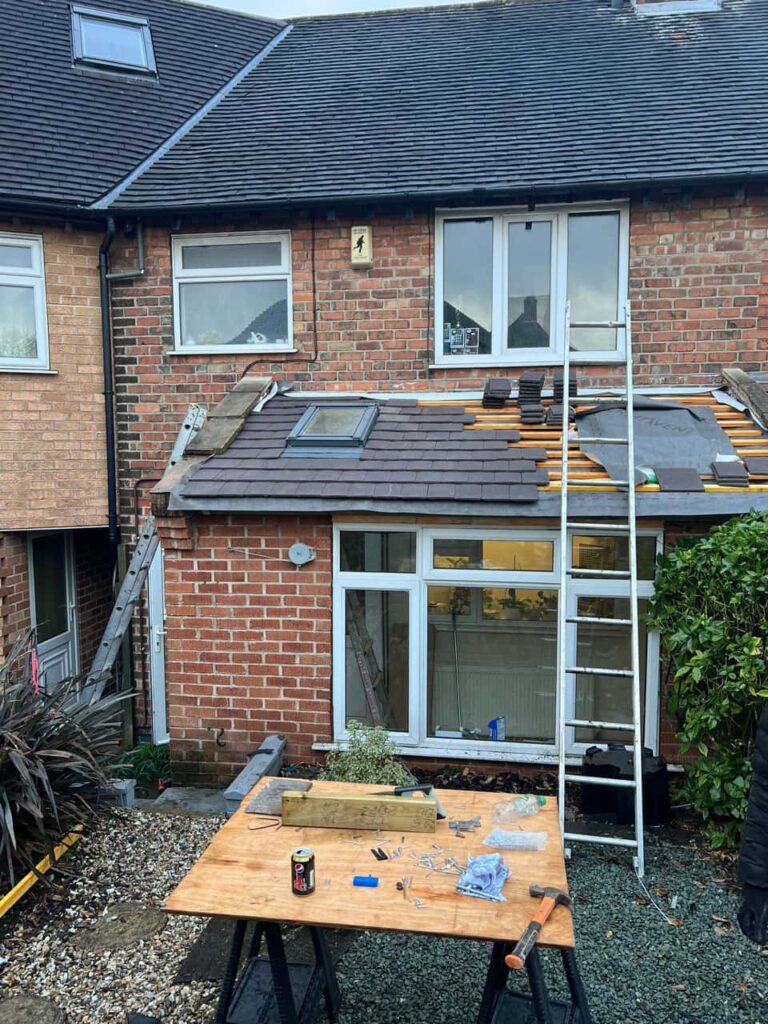
Many roofing problems begin well before water becomes visible inside a property. A cracked tile, weakened fixing or small gap in the flashing may initially allow only a limited amount of moisture beneath the roof covering. The underlay and surrounding materials can temporarily manage this water, concealing the defect until conditions worsen.
Understanding why early roof damage is difficult to identify can help property owners respond to subtle warning signs before a persistent leak develops.
Why Early Roof Problems Often Remain Hidden
Much of the Roofing System Is Concealed
Roof tiles or slates form the visible outer covering, but they are only one part of the roofing system. Beneath them sit the underlay, battens, fixings and structural timbers.
A tile can appear correctly positioned from ground level while its fixing or supporting batten has weakened. Underlay may also be torn, brittle or sagging without producing an immediate internal symptom.
Because these materials are concealed, their condition is difficult to assess without a closer professional inspection.
Water May Not Enter During Every Rainfall
Some roof defects allow water to enter only under particular conditions. A small gap may remain dry during light, vertical rainfall but leak when strong winds drive water beneath the covering.
Other defects become apparent only after prolonged rain has saturated surrounding materials. This can make a developing problem appear inconsistent and difficult to trace.
Useful details to record include whether dampness occurs:
- During heavy or prolonged rain
- When rain is accompanied by wind
- After rainfall rather than immediately
- In one season more than another
- In the same place every time
- Only following particularly severe weather
These patterns can help identify which part of the roof requires attention.
The Underlay Can Temporarily Conceal a Defect
Roofing underlay provides secondary protection when small amounts of moisture pass beneath tiles or slates. It can direct water down towards the roof edge without allowing it into the property.
However, underlay can deteriorate over time. If it becomes torn, brittle or unsupported, water that was previously contained may begin reaching the roof space.
The leak may therefore appear sudden even though the outer covering has been damaged for some time.
Small Tile Defects Are Difficult to See
Hairline cracks, worn edges and slight tile displacement may be almost impossible to recognise from the ground. A tile does not need to be completely missing to create a weakness.
Problems may include:
- Cracked or chipped tiles
- Tiles lifted slightly by wind
- Failed nails, clips or fixings
- Broken tile nibs
- Gaps caused by poor alignment
- Movement around ridges or verges
- Damage concealed beneath moss
A minor change in the overlap between tiles can affect how rainwater moves across the roof.
Flashing Defects Can Be Very Subtle
Lead flashing seals vulnerable junctions around chimneys, walls and other roof features. Small splits, lifted edges or separation from adjoining masonry may not be obvious from below.
Water entering through damaged flashing can travel along underlay or timber before becoming visible indoors. The resulting damp patch may therefore appear some distance from the actual defect.
Roof Valleys Can Hide Developing Problems
Valleys carry a concentrated flow of rainwater between adjoining roof slopes. Leaves, moss and other debris can obstruct this flow, while damage to the lining may remain hidden beneath neighbouring tiles.
A valley can appear serviceable from ground level even when water is beginning to pass beneath its edges. Once the surrounding underlay or battens deteriorate, the resulting leak may affect a much larger area.
Mortar and Fixings Can Fail Gradually
Mortar around ridges, hips and verges can develop fine cracks before larger sections become loose. Similarly, metal fixings may corrode or work free without causing immediate tile movement.
These gradual changes weaken the roof’s resistance to wind and rain. The first obvious sign may be a displaced tile following bad weather, even though deterioration had already been progressing.
Moisture Can Travel Before Becoming Visible
The position of an internal stain is not always directly below the point of entry. Water can follow rafters, battens, underlay or other surfaces before dripping onto insulation or ceilings.
This movement can delay visible symptoms and make the source difficult to identify. Treating only the area above the damp patch may consequently leave the original defect unresolved.
Roof Damage Is Not Always Visible From Ground Level
A ground-level check can reveal obvious missing tiles or damaged gutters, but it cannot provide a complete assessment. Roof pitch, building height, adjoining features and the position of the defect may all restrict visibility.
Walking on the roof without appropriate equipment is not advisable, as it can be unsafe and may crack tiles or damage weakened materials. A professional inspection allows vulnerable areas to be examined using a suitable access method.
Early Warning Signs to Watch For
Although a roof may not yet be leaking visibly, several signs can justify further investigation:
- Tiles or mortar found on the ground
- A ridge or verge that appears uneven
- Increasing moss around one section
- Gutters containing pieces of roofing material
- Daylight visible from the roof space
- Musty odours or damp insulation
- Dark marks on rafters or underlay
- A recently moved or cracked tile
- Repeated gutter overflow near the roof edge
None of these signs confirms a particular defect, but they can indicate that the roofing system needs closer attention.
How Professional Inspection Helps
A professional roof inspection considers the complete route that water may take. Tiles, flashing, valleys, ridges, verges, drainage components and accessible areas of the roof space can all be assessed together.
At Glenfield Roofing Repairs, we aim to identify both the visible defect and its underlying cause. This helps ensure that any recommended repair addresses the affected roofing components before a minor weakness develops into recurring water ingress.
Conclusion
Roof damage can remain hidden because many important components sit beneath the visible covering. Underlay may temporarily contain moisture, small defects can be difficult to see and water can travel away from its point of entry.
If you have noticed subtle signs of roof deterioration at your property in Glenfield, Leicestershire, contact Glenfield Roofing Repairs to arrange a professional assessment before a leak becomes established.
Call us on: 0116 502 2198
Click here to find out more about Glenfield Roofing Repairs
Click here to complete our contact form and see how we can help with your roofing needs.